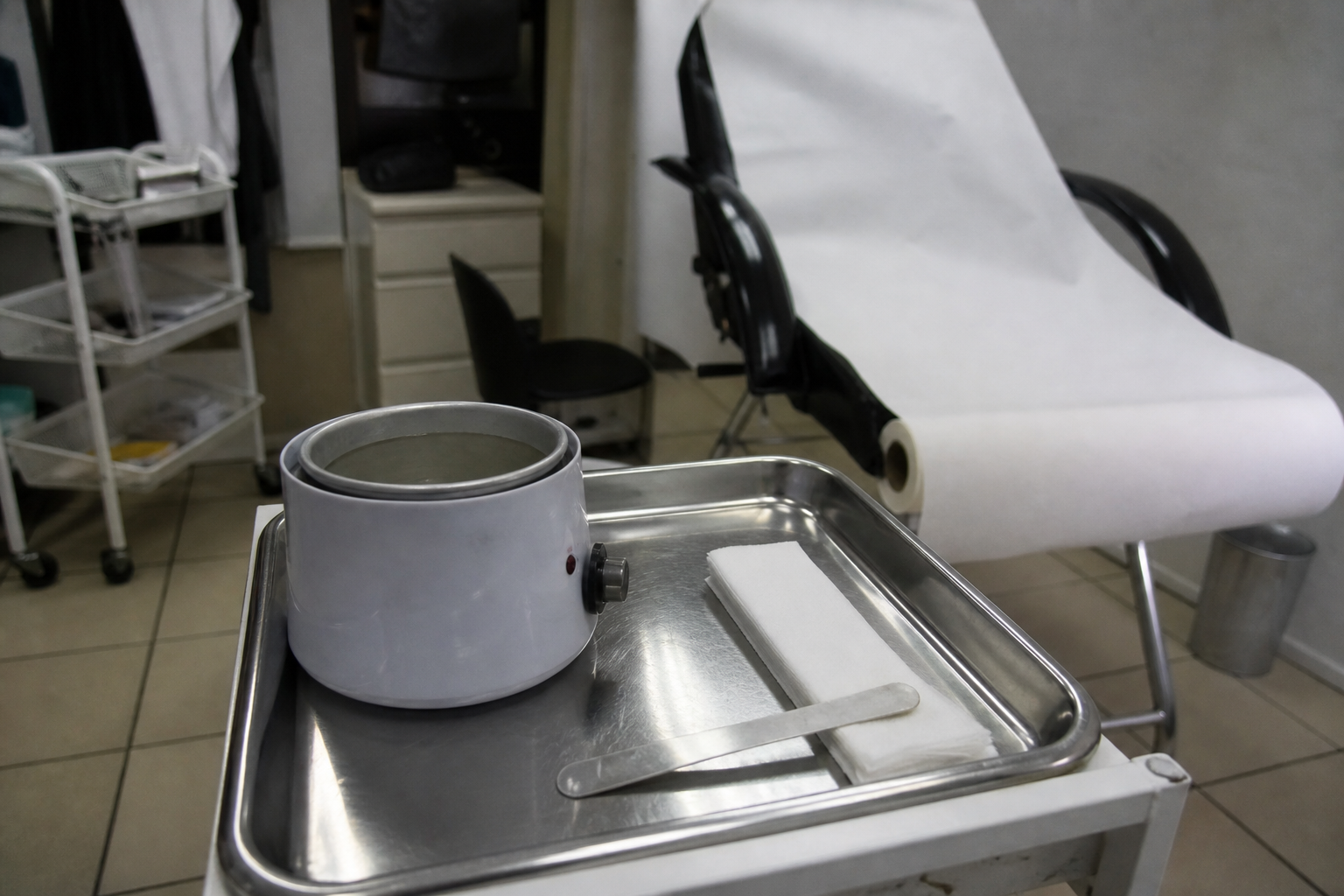
There is no official government or dermatology calendar that says “every three weeks” or “every six weeks” for eyebrow waxing. The interval is however long it takes your brow hair to reach a length the wax can hold. Book from the hair, not from a punch card.
The American Academy of Dermatology’s waxing guidance is written for at-home waxing, but the length and safety rules are the part that matters in a salon too. This is not a DIY wax manual for the eye area. If you want the hair removed by a person who does this next to eyes all day, use the Eyebrow Bar Directory and eyebrow threading bars — many of those shops also wax.
The length rule, not the week rule
The American Academy of Dermatology says hair should be about one-fourth to three-fourths of an inch long before waxing. If it is longer, they say to trim it so the wax is less messy and less painful. If it is shorter than that window, the wax has less to grip. That is why a shop will sometimes send you home: the hair is not ready, not because you missed a secret schedule.
How many days that length takes is individual. Growth speed is not a number this article is going to invent. Look at the brow in daylight. If you can see a stubble line the wax can catch, you are closer to ready than if the skin still looks freshly bare.
When you should not wax at all
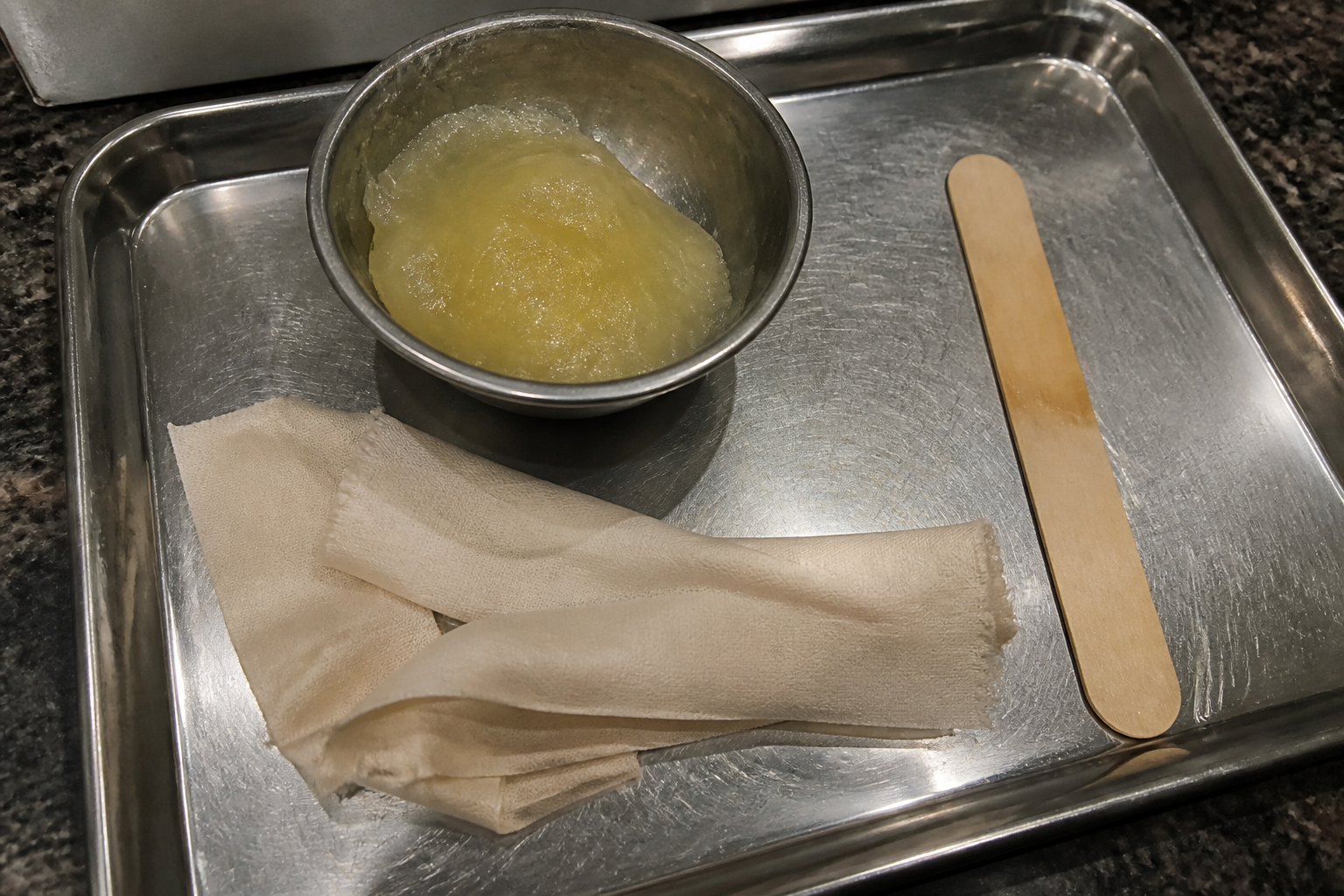
The American Academy of Dermatology says not to wax sunburned or very sensitive skin, and not to wax if you have taken isotretinoin in the last six months. On their isotretinoin FAQ they are direct: no waxing while taking the medicine and for six months after you stop, hot wax or cold wax, because waxing can cause permanent scars in people taking isotretinoin.
They also say to avoid over-the-counter products with retinol and prescription retinoids two to five days before waxing the face, so you do not remove skin with the hair. Tell the technician what is on your face. A “quick brow wax” is not worth a skin tear.
What the appointment should include
AAD technique notes for wax, in short: wash and dry the area so the wax can adhere; test that the wax is warm, not burning, on the inside of the wrist; spread wax in the direction of hair growth; hold the skin taut; pull the strip quickly in the opposite direction of growth. Afterward they suggest cold packs if there is pain, avoiding hot baths and showers, and a moisturizer that will not clog pores — they point to labels that say oil-free or non-comedogenic.
If redness or swelling lasts more than two days, they say to see a board-certified dermatologist. Folliculitis — inflamed follicles, often after the follicle is damaged — is described on MedlinePlus; keep the area clean and do not treat pus bumps as a reason to wax again.
Wax vs thread when you are booking the next visit
Wax needs that length window. Threading can catch shorter hairs, which is why some people switch methods instead of waiting. That is a preference and a skin decision, not a ranking. If wax leaves you with lifted skin or a burn, do not “try a hotter wax.” Change the method or skip the appointment. Eyebrow threading: pain, how to find a bar, and what to expect covers the other chair.
Do not use the gap between waxes to experiment with consumer hair dye on the stubble. The FDA says not to dye eyebrows or eyelashes with coal-tar hair dyes. Color is a separate service with its own rules — see eyebrow tinting or dying.
City lists are on all cities. Large markets include Las Vegas, Houston, and Miami.
Sources
- American Academy of Dermatology — Hair removal: How to wax
- American Academy of Dermatology — Isotretinoin: FAQs
- MedlinePlus — Folliculitis
- U.S. Food and Drug Administration — Hair dyes