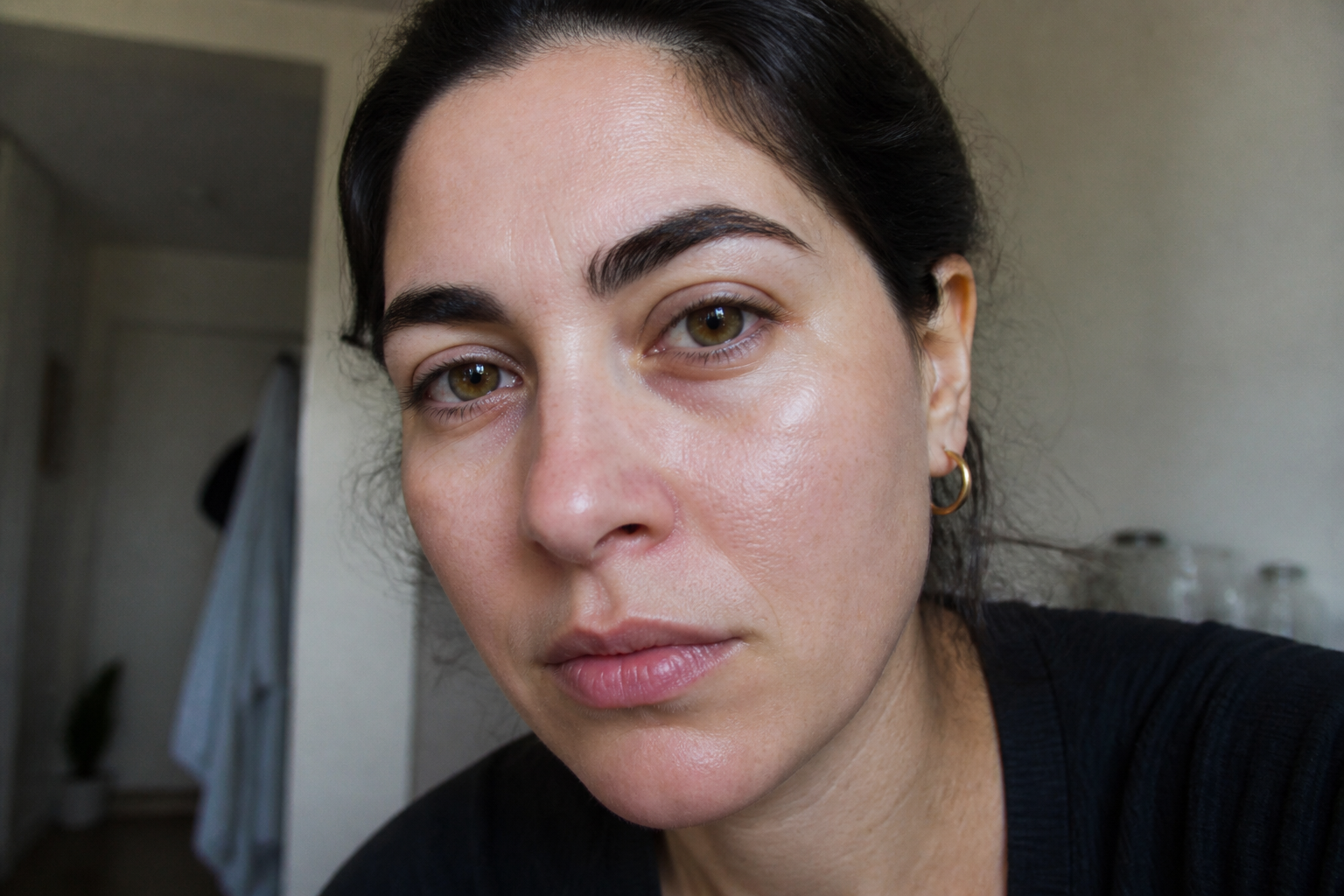
Thicker brows are usually a stop-doing problem before they are a product problem. Hair you keep pulling out cannot look bushy. Color can darken what is already there. Neither one grows a follicle that has been damaged to the point of shiny, bare skin.
This is not a treatment plan and it does not claim that oils, serums, or scalp minoxidil are proven eyebrow therapies. Those claims are everywhere. They are not in the sources below. If brows are falling out in patches, see a board-certified dermatologist. If you only over-tweezed them, the useful work is patience and a cleaner shape. The Eyebrow Bar Directory is for the second job, not the first.
Leave the hair you still have
Put the tweezers down for the hairs inside the brow. Clean only what sits clearly outside the line. That sounds obvious and it is the step most people skip because the mirror still wants a “cleaner” arch. How to shape eyebrows is the longer version: protect the top edge, protect the inner corner, and match toward the fuller side.
The American Academy of Dermatology’s page on hairstyles that pull describes traction alopecia: repeated pulling and tension can damage hair, and when the pulling continues, people can see shiny, bald skin where hair cannot grow back. Over-plucking is repeated extraction. If a spot has been bare for a long time or the skin looks smooth and empty, stop treating it like a grooming gap.
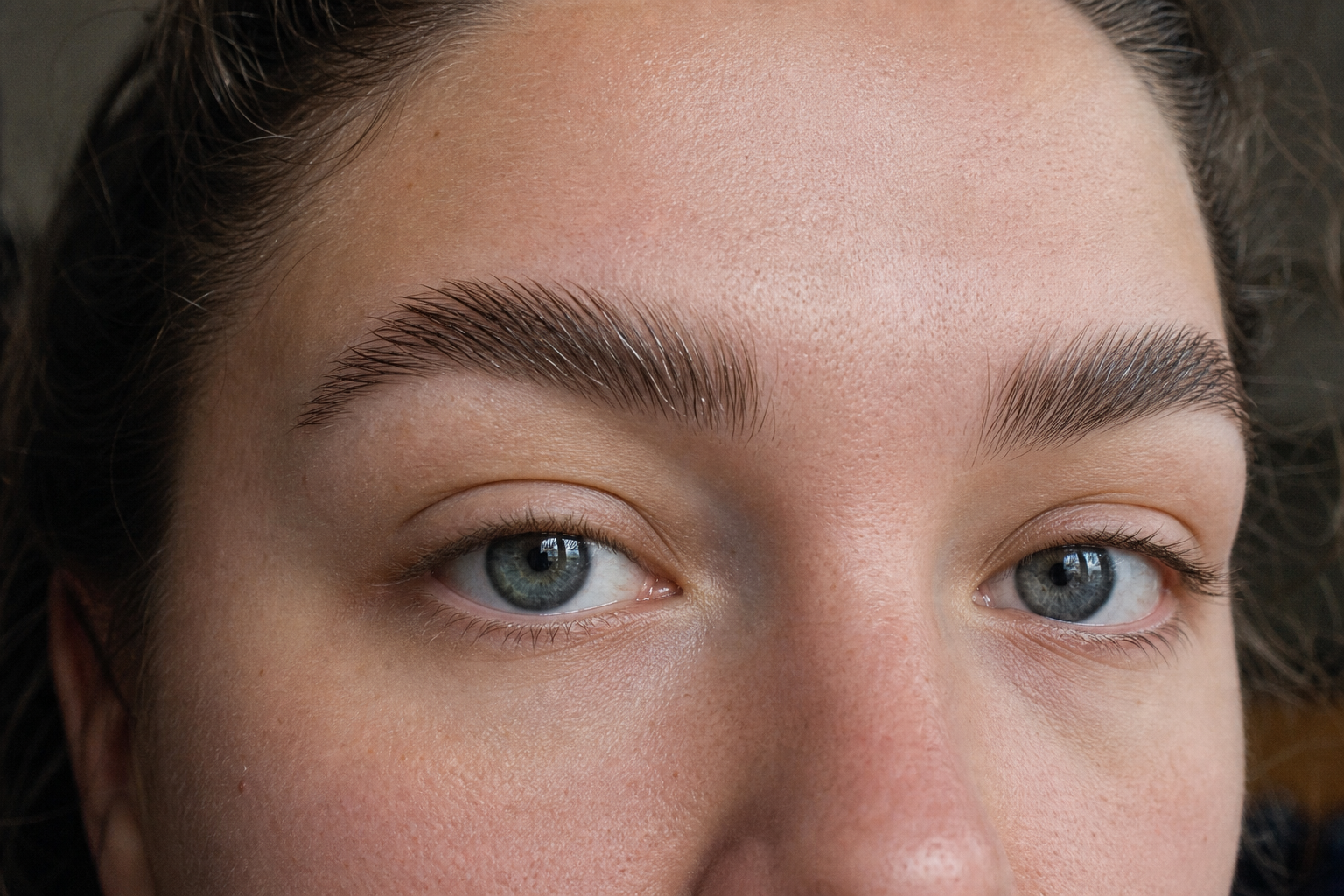
Shedding is not the same as loss
The American Academy of Dermatology separates hair shedding from hair loss. Shedding (telogen effluvium) is the body dropping more hairs than usual after a stressor — examples they list include high fever, surgery, giving birth, large weight loss, and stopping birth-control pills. People often notice the extra shed a few months later. As the body readjusts, the extra shedding stops; they say hair tends to regain its normal fullness within six to nine months.
That timeline is AAD language for shedding, not a promise that every thin brow will fill in on a calendar. Hair loss, in their terms, is when something stops the hair from growing. Causes they list include hereditary hair loss, an immune-system overreaction, some drugs and treatments, hairstyles that pull, harsh products, and a compulsion to pull hair out. A dermatologist is who tells those apart.
When thin brows are a medical finding
The National Institute of Arthritis and Musculoskeletal and Skin Diseases describes alopecia areata as an immune-system attack on hair follicles. It usually shows as coin-sized patches on the scalp, but NIAMS says any body part may be affected, including the eyebrows and eyelashes. There is usually no rash or scarring on the bare patch. That is not a threading appointment. It is a clinician visit.
Do not start a home “growth stack” while you ignore patchy loss. Do not put consumer hair dye on the gaps to hide them. The FDA says coal-tar hair dyes must not be used on eyebrows or eyelashes and warns that doing so may cause blindness.
What you can do without inventing a treatment
- Stop removing the interior of the brow. Strays only. Photograph the starting point in daylight so you do not “tidy” weekly into a thinner brow.
- Ask a technician for a grow-out shape, not a fashion-thin arch. Bring the photo. Threading bars and city pages such as Los Angeles and Dallas are how you find someone who will leave hair in.
- Treat color as cosmetics, not growth. A professional tint can make existing hairs read darker. It does not add follicles. Read eyebrow tinting or dying before you agree to any dye near the eye.
- Skip the unproven oil list. There is no FDA or AAD source in this article that says castor oil, pecan oil, or a drugstore “brow serum” grows eyebrows. If a product is sold as growing hair, that is a drug claim — not something to take from a comment section.
If you want help finding a shop, use all cities or search. What the first threading visit is like is in pain, how to find a bar, and what to expect.
Sources
- American Academy of Dermatology — Do you have hair loss or hair shedding?
- American Academy of Dermatology — Hairstyles that pull can lead to hair loss
- National Institute of Arthritis and Musculoskeletal and Skin Diseases — Alopecia areata
- U.S. Food and Drug Administration — Hair dyes