The “perfect” brow is the one that still looks like your face in daylight a month later. Most failed shapes are not a missing golden-ratio stencil. They are over-removal: too much off the top, too much from the inner corner, or a second pass that “evened out” the fuller side until both sides were thin.
This guide is about leaving hair in and cleaning what sits clearly outside the line you already have. It is not a medical treatment and it does not invent a face-map that a government or dermatology group has published as a standard. If you want a first full reshape, use the Eyebrow Bar Directory and find a threading bar instead of guessing with tweezers.
Start with the hair that is already there
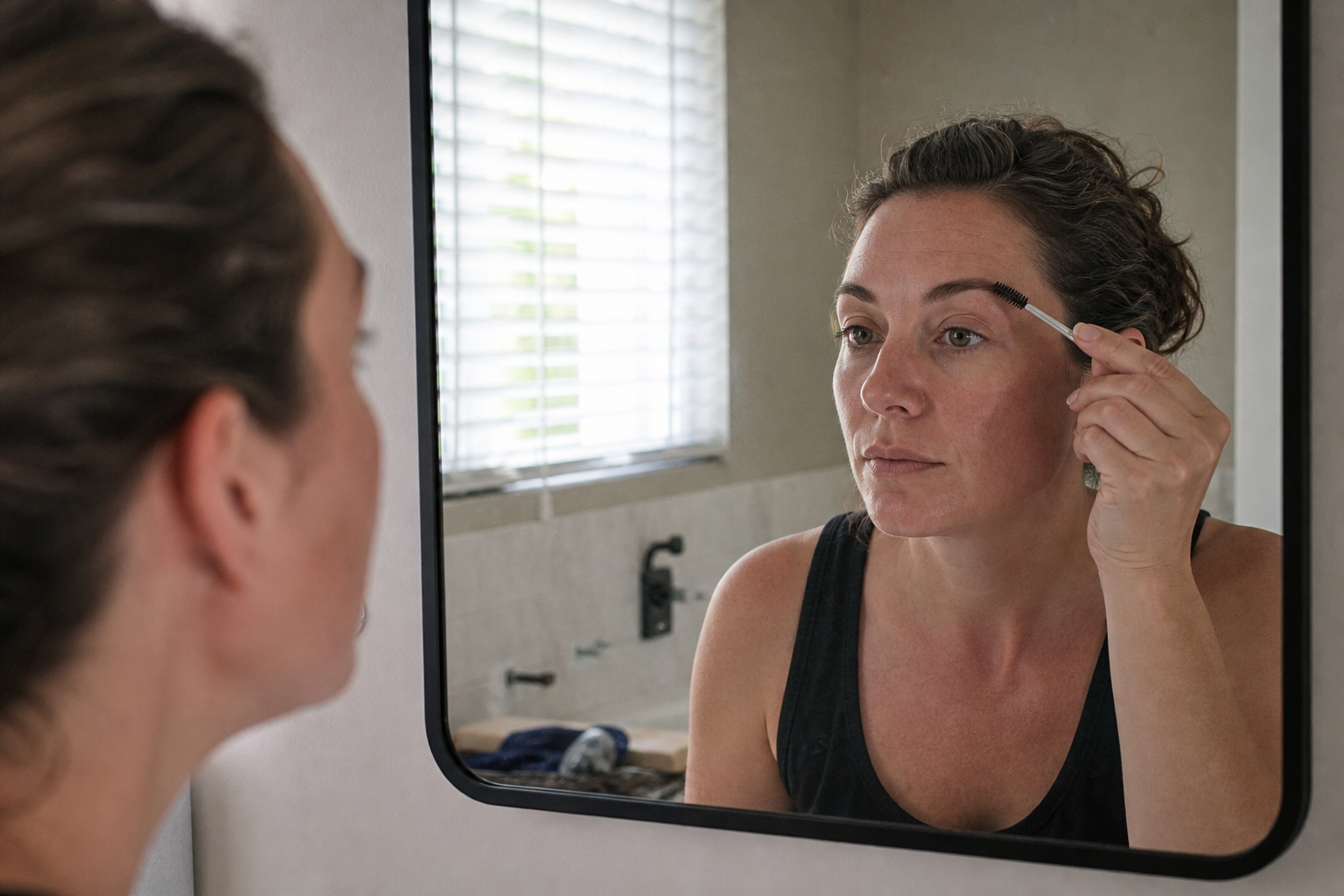
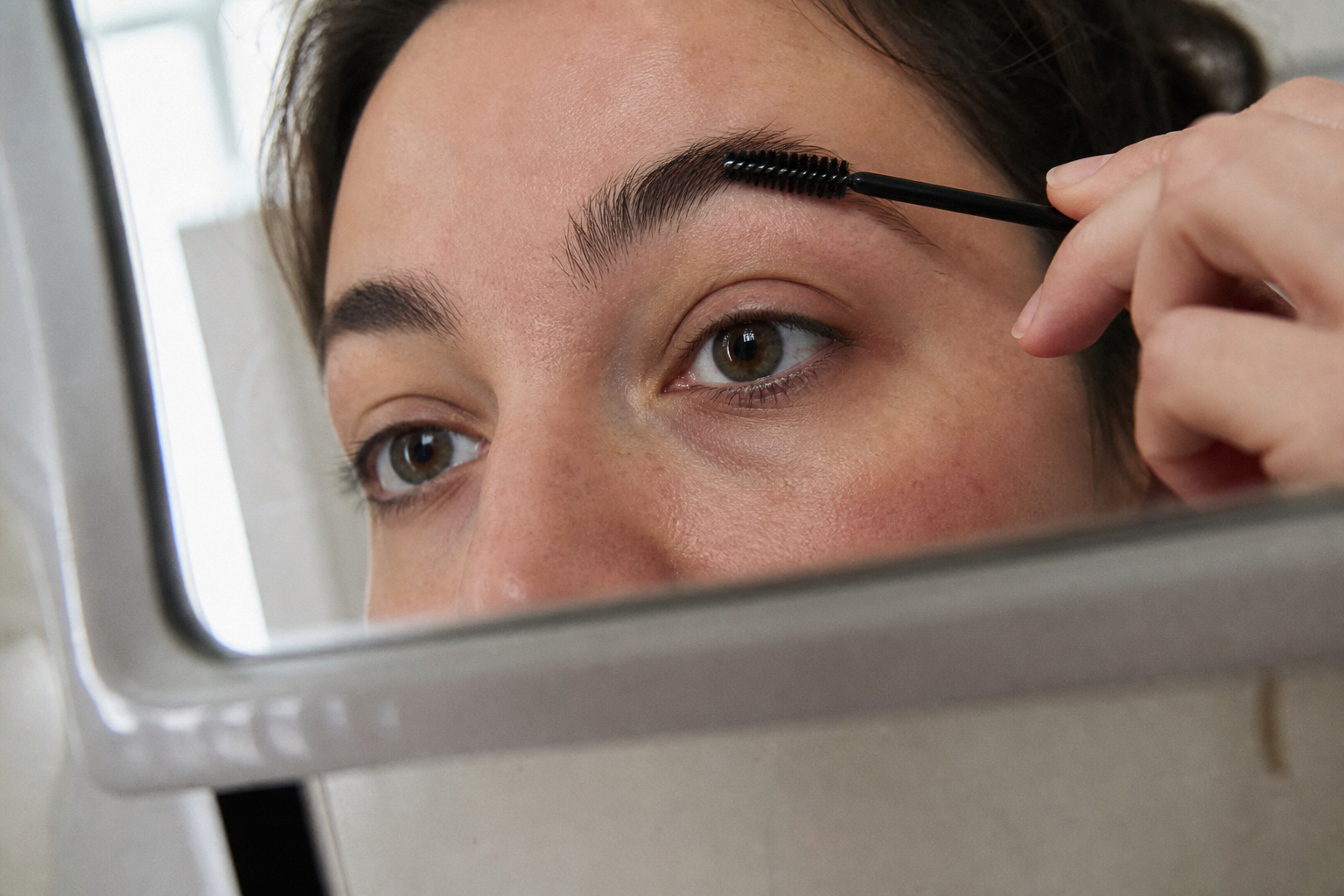
Brush both brows up and out with a clean spoolie. Look at them in daylight, not bathroom vanity bulbs. Photograph the pair. That picture is your baseline. You are deciding which hairs are outside the existing brow — not drawing a thinner brow on top of a fuller one.
Work on one brow, then the other, then stop and compare in the photo. Do not keep pulling because the mirror still “feels off.” Mirrors lie when you are two inches from the glass and already committed.
What to leave alone on the first pass
- The top edge. Dropping the top line is how brows go flat. Strays under the arch are the safer cleanup.
- The inner corners. A gap between the brows and the nose looks wider than it feels in the mirror. Leave density there unless a hair is clearly on the bridge.
- The tail if it is already short. Shortening a weak tail makes the eye look unfinished. Clean below it; do not erase it.
- The fuller brow. Match toward the fuller side. Thinning the good brow to match the sparse one is how both sides lose.
Over-plucking is the real damage, not a “wrong shape”
The American Academy of Dermatology describes traction alopecia as hair loss from repeated pulling and tension on the hair. When the pulling continues long enough, people can end up with shiny, bald skin where hair will not grow back. Over-plucking is repeated extraction of the same hairs. It is not the same as a tight ponytail, but the warning is the same idea: repeated stress on a follicle is not free.
If a patch stays bare, the skin looks shiny, or brows are falling out in round areas, stop shaping and see a board-certified dermatologist. The National Institute of Arthritis and Musculoskeletal and Skin Diseases notes that alopecia areata can affect the eyebrows and eyelashes, not only the scalp. That is a medical diagnosis, not a tweezer problem. More on leaving hair in is in how to give yourself thicker, bushier eyebrows.
Tools that stay honest
A spoolie and good light do more than a stencil. Tweezers are for isolated strays. Threading or waxing removes a line of hairs at once — useful in a studio, easy to overdo at home. If you have never shaped these brows before, DIY threading is a cleanup method, not a redesign method.
Do not use consumer hair dye to “fill in” a shape you already over-removed. The U.S. Food and Drug Administration says not to dye eyebrows or eyelashes with coal-tar hair dyes; the statutory caution on those products includes a blindness warning. Color and shape are separate jobs. See eyebrow tinting or dying before you put dye near the eye.
When to hand the first shape to a bar
A technician cannot invent hair you do not have. They can keep you from deleting the hair you still have. That is worth a visit if the brows are already uneven, if you are growing them out, or if you want a line someone else can repeat in a few weeks.
Search by city on all cities, or open a market page such as Chicago, Nashville, or Atlanta. What the first visit feels like, including discomfort, is covered in eyebrow threading: pain, bars, and what to expect.
Sources
- American Academy of Dermatology — Hairstyles that pull can lead to hair loss
- National Institute of Arthritis and Musculoskeletal and Skin Diseases — Alopecia areata
- U.S. Food and Drug Administration — Hair dyes