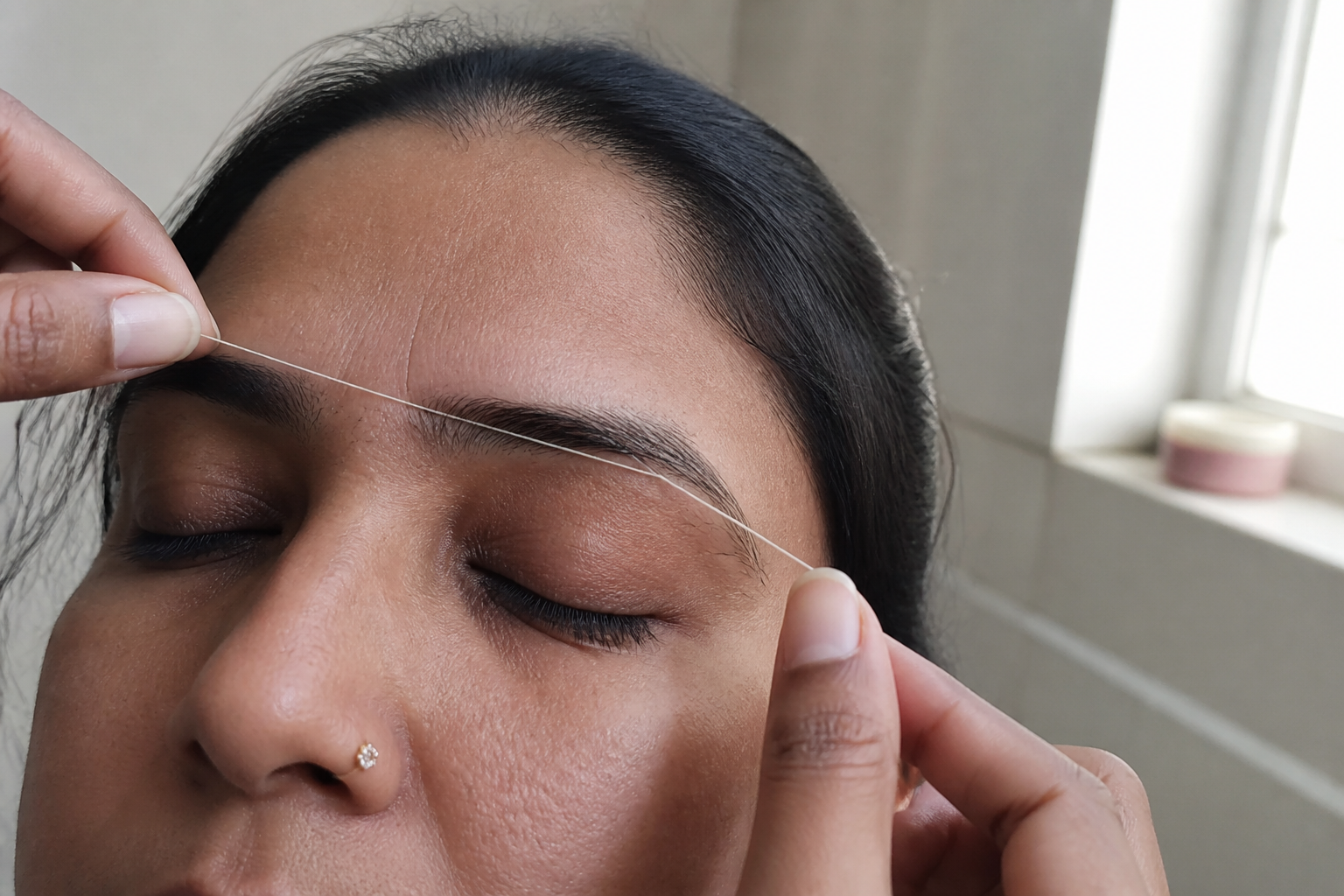
Eyebrow threading uses a twisted cotton thread to catch hairs and pull them from the follicle. There is no wax and no chemical depilatory. The work sits a few millimeters from the eye, which is why most people still book a trained technician instead of learning it from a phone video.
This is a beginner safety guide, not a medical protocol and not a promise that home threading will match a studio result. If your skin is broken, infected, sunburned, or already swollen, skip DIY. Browse eyebrow threading bars in the Eyebrow Bar Directory and leave the first full shape to someone who does this all day.
What threading actually does
A length of cotton thread is twisted so it can grip hair and lift it out at the root. That is the same mechanical idea as tweezers, just faster and with a finer line. Salons use it on brows and sometimes on the upper lip. It is a hair-removal method, not a color service and not a growth treatment.
Because the hair comes out at the follicle, the skin can redden. Follicles that are damaged or blocked can become inflamed. MedlinePlus describes folliculitis as inflammation of one or more hair follicles; damaged follicles often become infected with staphylococci. Shared cloths, reused thread, or working on broken skin raise that risk. That is a hygiene problem, not a “beginner skill issue.”
Where DIY goes wrong
The usual failures are not “the thread would not twist.” They are over-removal and dirty tools.
- Working over the eyelid or too close to the lash line. One slip is an eye injury, not a redo.
- Chasing symmetry on the first pass. You cannot put the hair back. Thin, patchy brows are how most home jobs look a week later. Read how to shape eyebrows before you remove anything from the top line.
- Reusing thread or sharing tweezers. Fresh thread for one person, one session.
- Threading inflamed or broken skin. The American Academy of Dermatology tells people not to wax sunburned or very sensitive skin. The same caution applies here: do not pull hair through damaged skin.
If you still want to try it at home
Keep the first session small. You are cleaning strays, not redesigning the brow.
- Wash your hands and the brow area. Dry the skin. Product residue makes it harder to see the real hairline.
- Brush the brows up with a clean spoolie. That shows the shape you already have. Photograph both brows in daylight before you start.
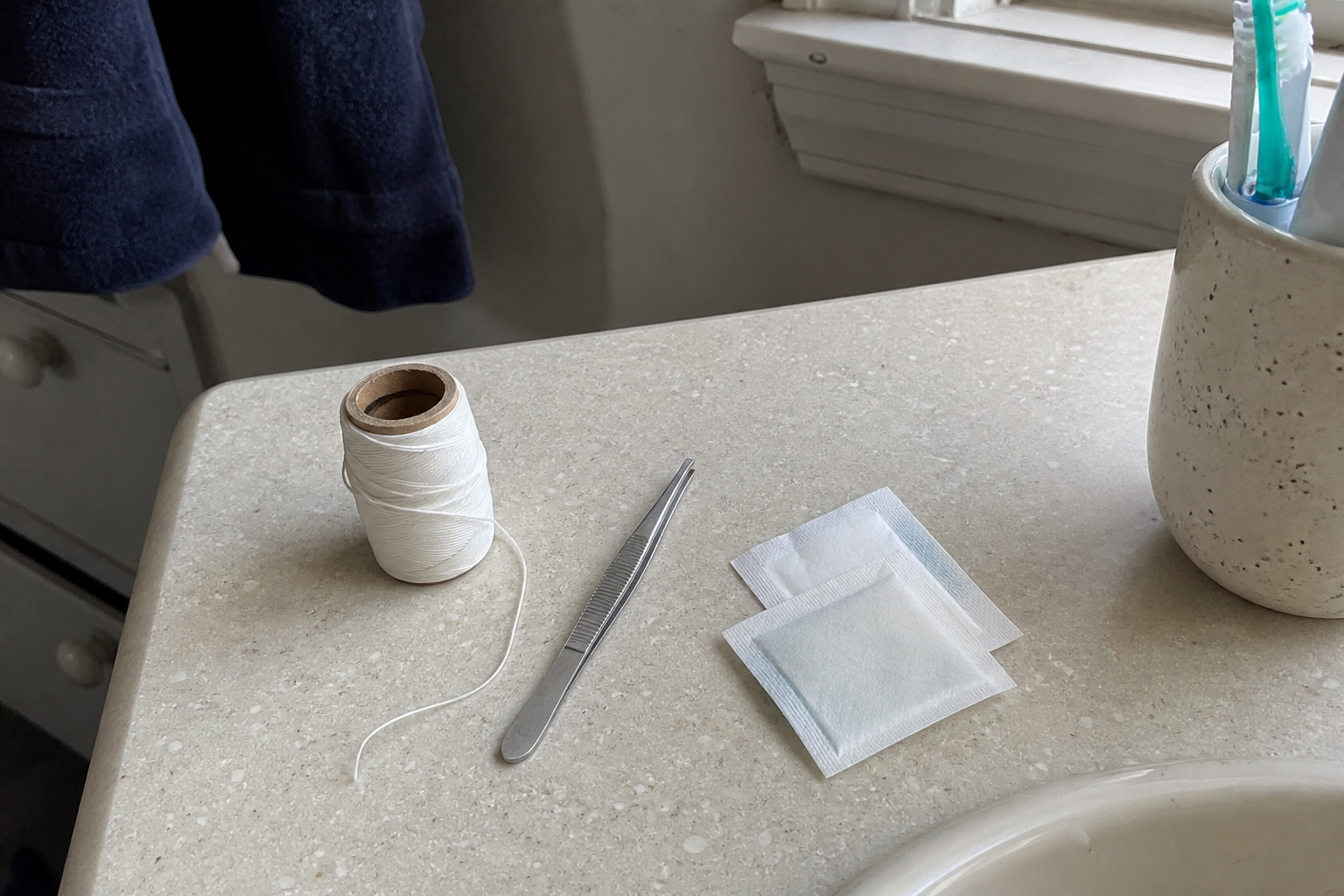
- Use new cotton thread and clean tweezers. Do not share either. Keep scissors away from the lash line if you only need to trim long hairs.
- Hold the skin taut and work on one small section outside the existing brow. Stay on the brow bone, not the eyelid. Stop if you draw blood or the skin swells.
- Leave the inner corner and the top edge alone unless a stray hair is clearly outside the line. Those two zones are where DIY brows go hollow.
- Stop after the strays. If the two sides still do not match, book a bar. Do not keep pulling to “fix” it.
There is no official beginner thread length, loop count, or pain score published by a government or dermatology organization. Videos that give you those numbers are not a safety standard. If the motion feels uncontrolled, put the thread down.
Aftercare that is actually sourced
Keep the area clean. MedlinePlus prevention notes for folliculitis include keeping the skin clean and avoiding contaminated washcloths. Do not pick at the follicles. Skip heavy makeup on the brow until the redness settles.
The American Academy of Dermatology says that if redness or swelling after waxing lasts more than two days, you should see a board-certified dermatologist. Use the same threshold after home threading. Signs of infection that MedlinePlus lists for contact-related skin problems include tenderness, warmth, or fever — those are a clinician visit, not another pass with the thread.
When a bar is the better first step
Book a technician if this is your first shape, if one brow is already thinner than the other, or if you want a line you can maintain instead of a one-off cleanup. A directory listing will not guarantee a result, but it will get you to shops that publish their services. Start at all cities, or go city-first — Los Angeles, Las Vegas, Houston, and New York are on the map.
If you want the pain, hygiene, and first-visit questions in one place, read eyebrow threading: pain, how to find a bar, and what to expect. Shops that belong in the directory can add a listing.
Sources
- MedlinePlus — Folliculitis
- MedlinePlus — Contact dermatitis
- American Academy of Dermatology — Hair removal: How to wax