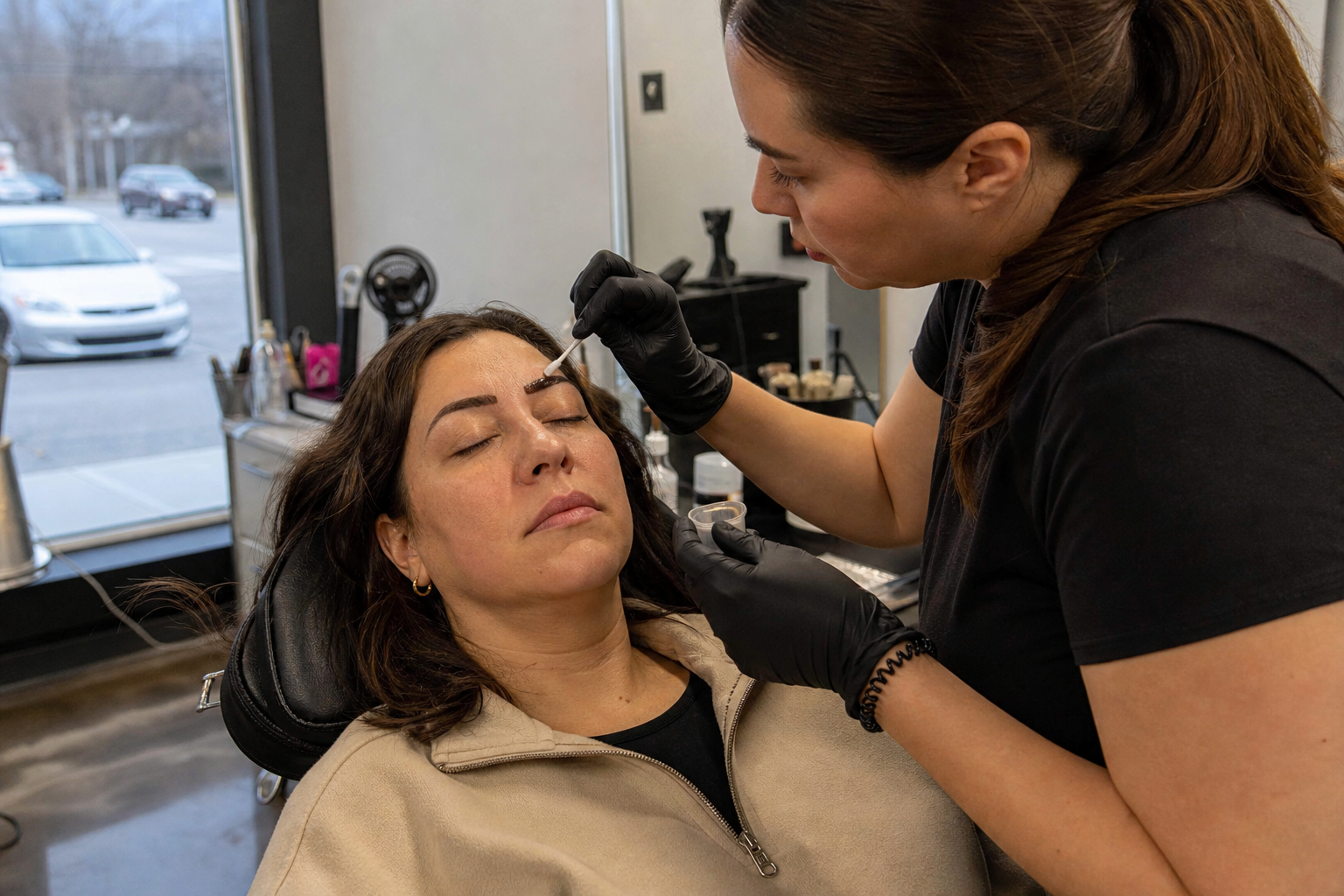
People say “tint” when they mean a salon brow color and “dye” when they mean the box they use on scalp hair. Those words get used interchangeably in ads. They are not interchangeable under U.S. color-additive law, and the eye area is the reason.
This article explains what the Food and Drug Administration actually publishes about coloring hair near the eyes. It is not a product recommendation, not a how-to for home dye, and not medical advice. If you want brows that look denser without chemistry, start with shaping and leaving more hair in. If you want a color service, book it through a shop you can vet on the Eyebrow Bar Directory.
What “dye” means in FDA language
The FDA’s hair-dye page is blunt about coal-tar hair dyes: they are not eyebrow or eyelash dyes. Color additives intended for dyeing the eyebrows or eyelashes need FDA approval for that use. The agency states that no color additives are approved for dyeing the eyebrows or eyelashes in that consumer-dye sense.
Federal law also puts a required caution on coal-tar hair dyes. The statement tells the user to do a preliminary skin test and says the product must not be used for dyeing the eyelashes or eyebrows; to do so may cause blindness. The FDA repeats the same rule in consumer materials: keep hair dyes away from the eyes, and do not dye eyebrows or eyelashes. Eye injuries, including blindness, have occurred when hair dyes were used in the eye area.
That is the answer to “can I use my regular hair dye on my brows at home?” No. Not as a shortcut, not as a cheaper tint, not because a video did it.
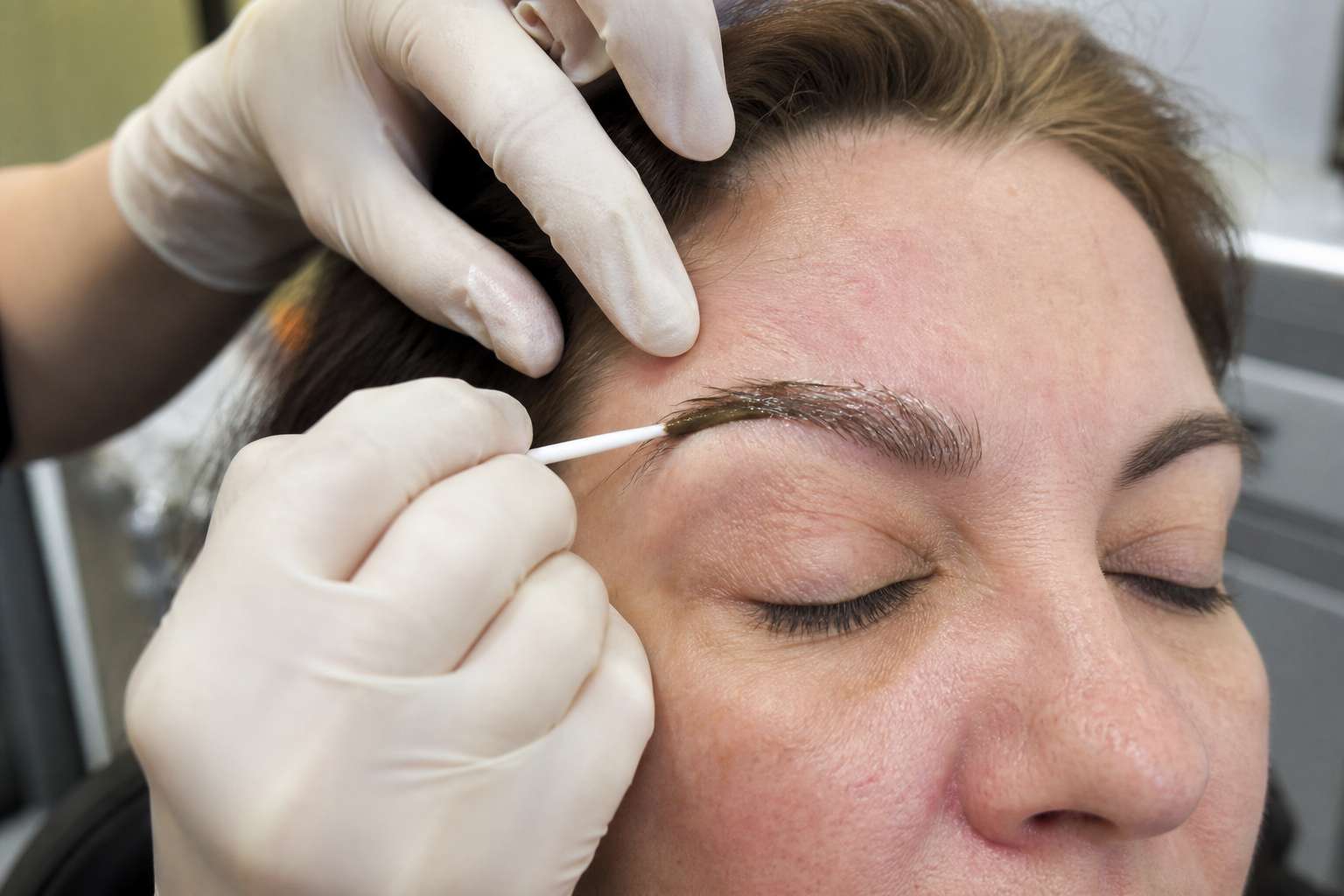
The one color additive FDA listed for professional brow and lash color
In 2021 the FDA amended the color-additive regulations to allow silver nitrate in professional-use-only cosmetics intended to color eyebrows and eyelashes. The Federal Register final rule and the codified restrictions are specific:
- No more than 4 percent silver nitrate by weight in the cosmetic product.
- Applied by a professional. Not for distribution or direct sale to consumers.
- Not intended for use on persons under the age of 16.
- Not intended to stay on longer than one minute, then immediate removal.
- The required label warns that silver nitrate may permanently stain skin, may irritate the eyes, and that eyes should be rinsed if the product contacts them.
FDA consumer text on hair dye and hair relaxers repeats those limits: up to 4 percent silver nitrate in a viscous gel, not for anyone under 16, not for longer than one minute, not sold directly to consumers. If a shop offers a “brow dye,” ask what product they are using and whether it is a professional-use product labeled for that job. A box from a drugstore shelf is not that product.
What “tint” usually means in a brow bar
In a studio, “tint” is a menu word. It can mean a short-contact color on existing brow hairs so pale or gray hairs show, or so a freshly shaped brow reads darker in photos. It is not a growth treatment. It does not replace hair you already pulled out. It also does not override FDA rules because someone called it a tint instead of a dye.
If the product is a coal-tar hair dye, the statutory caution still says it must not be used on eyebrows or eyelashes. If the product is a professional silver-nitrate formula, the professional-only and timing limits above apply. If the product is something else, the shop should be able to name it. “It’s just a tint” is not a safety review.
Patch tests and skin reactions
For hair dye, FDA consumer guidance is a 48-hour patch test: rub a small amount on the skin, let it dry for 48 hours, and do not use the dye on the hair if a rash appears. MedlinePlus lists hair dyes among substances that can trigger allergic contact dermatitis on the face, head, and neck. A reaction on the brow sits next to the eye. That is why you do not improvise with leftover scalp dye.
If you get a severe reaction, or signs of infection such as tenderness, warmth, or fever, MedlinePlus says to seek care. A board-certified dermatologist is the clinician for skin and hair, not a second appointment at the same chair.
Which option makes sense
- You only want a cleaner shape. Skip color. Shape or thread. Color will not fix a hollow inner corner.
- You want existing hairs to read darker. That is a professional color conversation, with a product the shop can name, not a box of scalp dye at the bathroom sink.
- You want thicker-looking brows. Color can darken hairs that are already there. It cannot create follicles. See thicker, bushier eyebrows.
- You are under 16, or the shop cannot explain the product. Walk. The silver-nitrate rule is not intended for use under age 16, and mystery dye next to the eye is not a bargain.
Listings that offer tint, threading, waxing, microblading, or lamination are collected at eyebrow threading bars and by city on all cities. Read about the directory if you are deciding whether to book from a listing or add your shop.
Sources
- U.S. Food and Drug Administration — Hair dyes
- U.S. Food and Drug Administration — Hair dye and hair relaxers
- U.S. Food and Drug Administration — Hair dyes and relaxers (PDF)
- Federal Register / GovInfo — Listing of color additives; silver nitrate (Oct. 6, 2021)
- Federal Register — Silver nitrate; confirmation of effective date
- MedlinePlus — Contact dermatitis